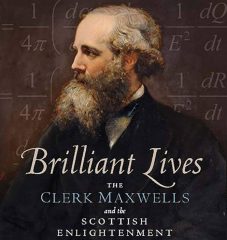
Brilliant Lives
by John W. Arthur
Second edition
Published by the author in 2024
First published in Great Britain in 2016 by
John Donald, an imprint of Birlinn Ltd
Copyright © John W. Arthur 2016, 2024
All rights reserved.
Advocate: a barrister
Annualrent: (one word) interest on a debt
Attainder: a form of condemnation reserved for serious capital crimes such as treason. An attainted person was stripped of their titles and property, which could not then be inherited by the heir
Assize: jury
Baillie: in Scotland, a town councillor
Baron: title once given to the senior judges of the Exchequer Court
Baronet: a hereditary knight whose baronetcy is normally attached to lands.
Baronetcies were granted by the Crown, usually as a reward for services rendered
Bow: distinctly narrow or crooked part of a street, e.g. Edinburgh’s West Bow and Nether Bow
Burgess: citizen accredited with certain rights, e.g. to carry out his trade
Causey: causie stane: a hard stone sett used for paving featuring in many of the streets of old Edinburgh and the New Town
Clandestine marriage: one not performed by a licensed minister of religion. See also irregular marriage
Close: built-over passageway. Many of Edinburgh’s old closes have been preserved.Some of them opened out into courts, such as Milne’s Court and James’Court
Commissary: judge of the Commissary Court which had jurisdiction over wills and divorces
Court: open area enclosed by buildings
Covenanter: an adherent to the Scottish National Covenant of 1638, which demanded freedom from all forms of pressure to conform to episcopal beliefs and practices. See note 8 of Chapter 3 for details
Curator: legal guardian, e.g. of a minor. See also tutor
Dispone: to legally transfer real or personal property
Dominie: schoolmaster, from the Latin dominus, master
Drystane dyke: a wall made without mortar by using irregular flattish stones that lock together under their own weight
Dux: first in the class or school at the end of the school year
Dyke: wall
Eik: a supplement, as in the eik to a testament
Entail: a legally binding document, the main purpose of which is to dictate the line of succession of heritable property. See for example the Middlebie Entail in §6.3
Exchequer Court: the court that ruled over all matters related to government finances and revenue in Scotland
Feu: the right to hold property, as given by a ‘superior’, ultimately one who holds land directly from the Crown; adj. feudal. See Youngson (p. xxiv)
Flit: move house
Gait: road or street, e.g. Cowgate, Canongate
Gardyloo: literally‘watch out for the water’, from gardez l’eau (phonetically and euphemistically)
German: (as in brother-german) natural
Hospital: a place of refuge for the needy or infirm
Howff: habitual meeting place, frequently a drinking den
Irregular marriage: one meeting the legal standard, that a declaration of marriage had been made, but not meeting the full requirements of a regular marriage.
Jus relictae: a widow’s rights, e.g. a share of the joint movable property and a terce.
Laird: landowner, whether titled lord or otherwise
Land: large tenement often with several independent dwellings accessed from a common entry, for example, Gladstone’s Land in the Lawnmarket
Liferent: the use of something for the rest of one’s life
Lord Advocate: the highest legal post in Scotland
Merk: (1) an ancient Scottish monetary unit equal to two thirds of one pound Scots;
(2) a measure of land, e.g., the ‘Twenty Merk Land of Middlebie’
Pavement: sidewalk
Port: city gate
Pupil: a boy under the age of fourteen or a girl under twelve
Pound Scots: The original Scottish pound. On monetary union in 1707 it was worth a twelfth of a pound sterling, i.e. twenty pence in pre-decimal currency. See also merk
Pounds, Shillings and Pence: British currency up until 1971; the pound (£ or L) was divided into twenty shillings (s), each of which was worth twelve pence (d). Sums of money were represented as, for example, £1 2s 3d or £1/2/3
Press: shelved cupboard
Regular marriage: one complying with rules of the established Church (c. f. Irregular marriage).
Retour: legally return (as heir)
Royal Mile: the long street running downhill from Edinburgh Castle to Holyrood Palace. It comprises four main sections, Castlehill, Lawnmarket, High Street and Canongate
Sasine: a transfer of feudal property. Also the deed of transfer or the record of it. See also seise
Seise: to take possession of feudal property. See also Sasine
Sheriff: county magistrate
Signature: the draft in English of a charter to be written out in Latin, on vellum, for signature by the monarch
Solicitor General: the highest legal post in Scotland after Lord Advocate
Summons Declarator: a legal notification of involvement in an impending court action
Tack: (1) lease; (2) share of product taken as rent
Tacksman: under the feudal system, a henchman granted a ‘tack’ from his superior in return for services, e.g., bringing in rents, and keeping order
Tailzie: alternative form of the word entail
Tenement: a holding; a building divided into separate dwellings or shops
Terce: the right to a share (nominally a third) of a dwelling house and land
Tolbooth: town hall, often with a gaol
Town or Toun: anything from a city down to a single house that was the chief building in a country area, for example, ‘Waverley learned … that in Scotland a single house was called a town’ (Scott, Sir Walter, 1814, Chap. IX)
Turnpike stair: a spiral staircase, usually built onto the exterior of a building
Tutor: the curator of a pupil
Valve: vacuum tube
Writer: (1) general legal practitioner; (2) clerk or accountant in the HEICS
Writer to the Signet: a legal practitioner accredited to appear in the Court of Session, abbr. WS
Wynd: a narrow street with buildings on either side, for example, St Mary’s Wynd.
 Brilliant Lives