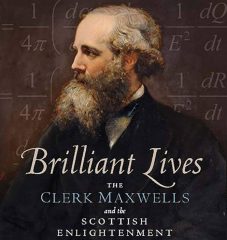
Brilliant Lives
By John W. Arthur
Second edition
Published by the author in 2024
First published in Great Britain in 2016 by
John Donald, an imprint of Birlinn Ltd
Copyright © John W. Arthur 2016, 2024
All rights reserved.
Contents
7 Agnes Maxwell and James Le Blanc
7.1 Who was James Le Blanc?
Two years after William Clerk’s death, his widow Agnes Maxwell remarried on 26 July 1725 to Major James Le Blanc, a French Protestant. Somewhat surprisingly, there were a handful of Frenchmen of that name in and around Edinburgh in the early 1700s, long before the town decided on a plan to bring in weavers from Picardie (Dobson, 2005, p. 61). If Major Le Blanc had come directly from France, he must have decided at some point to anglicise his Christian name. Many such French Protestants, generally referred to as Huguenots, had fled France following the persecution in the counter-reformationary upheavals of the late sixteenth century. Several Huguenot massacres were perpetrated by the Roman Catholic majority, notably in Paris on St Bartholomew’s Day, 1572.
If the Edict of Nantes in 1598 was intended to alleviate these troubles, it was only partially successful and over time it came to be disregarded. Emigration consequently continued, with many Huguenots coming to England and Ireland, some of them eventually finding their way to Scotland. It is likely that James Le Blanc came by way of Ireland, for in 1694 he appears to have been a lieutenant in Lord John Murray’s Regiment of foot (Dalton, 1896, p. 386) which had been engaged in the aftermath of James VII’s last stand at the battle of the Boyne of 1690. Although his forename is not given in the regimental rolls, in a petition to the Scottish parliament James Le Blanc stated that he was indeed a lieutenant in that very regiment.[1]
It is clear from the foregoing that James Le Blanc, onetime soldier, was probably born around or before 1675, and that he was from a relatively well-off family, otherwise he would not have been a commissioned officer in 1694. This setting is also typical of many Huguenot merchant families who fled France and managed to set up business very successfully in other parts of Europe. From his petition of 1705, we find that Le Blanc was in partnership with a Mr William Scott in the business of manufacturing and working glass. He ground and polished glass panes for making windows in carriages and sedan chairs (Turnbull, 2001, pp. 191−198). Le Blanc’s side of the trade was the production of mirrors which were either framed on their own or fitted into furniture.[2] Nevertheless he supplied and even hired out other glass products, for example, lighting sconces for use at funerals, and furniture, including a fine ‘Scritour’ (writing desk) supplied to the young Laird of Grant.[3]
The business, however, was not without its problems and in 1705 he and Scott had to petition the Scottish parliament to try to get the duty lifted on the rough glass plates they imported from France.[4] While they, or more specifically Scott, had taken part in an earlier enterprise to set up a glass factory at Morison’s Haven in Prestongrange (Turnbull, 2001, pp. 189−204), it had not been entirely successful, and a competitor by the name of Sarah Dalrymple held the monopoly in Edinburgh on the sort of glass plates wanted by Scott and Le Blanc; naturally she wanted them to use her product rather than import them. After petition and counter petition[5] some sort of compromise was reached, which Chambers somewhat inaccurately alludes to in his Domestic Annals of Scotland (1861, pp. 154−155).
James Le Blanc married a ‘gentlewoman of this countrey’, Elizabeth Houston, daughter of the deceased John Houston of Wester Southbarr, a cadet of the Houstons of Houston, and in 1707 he was one of a number of other immigrants who had done well for themselves and their adopted country, and were accordingly naturalised in the run-up to the Union of the Parliaments.[6] In the Act of naturalisation, James Le Blanc’s entry is paired with Daniel Lasagette, both given as merchants. The link to Lasagette is interesting, firstly inasmuch as the records for Newhailes House (Rock, 2013a) give a broader idea of the type of merchandise he dealt in, and secondly because Daniel Lasagette was known to the Clerks of Penicuik, and even wanted to marry one of the Baron’s sisters. He was still in contact with the Baron until around 1730.[7]
7.2 James Le Blanc and the Baron
The next we hear of James Le Blanc seems to be at first sight a simple coincidence. In his memoirs the Baron tells us:
[In June and July 1710] I resolved to take a journey … [to Bath to take the waters] …
I traveled with two friends, one Major Leblanc, a French man, and one Mr. Robert Clerk
(BJC, p. 76)
How the Baron first met James Le Blanc can only be conjectured, but the Baron was interested in all manner of things, and the manufacture of glass and mirrors could well have been one of them. From a different perspective, however, we can also reveal a family connection. Here we recall that the Baron’s second wife was Janet Inglis, whose mother was Anne Houston. She was the daughter of Sir Patrick Houston of Houston. As we know, James Le Blanc had married, in 1699, Elizabeth Houston, daughter of John Houston Esq. of Wester Southbarr, who was Sheriff Depute of Renfrew in 1678.[8] The two Houston families were highly likely to have been connected, as Family Tree 4(a) demonstrates.
If the Baron and James Le Blanc became acquainted because both their wives had a Houston connection, it would have happened between 1709 and 1710, consistent with the time of the Baron’s second marriage and his first mention of Le Blanc in his memoir. At any rate, the paths of the Baron and James Le Blanc crossed again in 1715, when Le Blanc rejoined the army in the face of the first Jacobite rebellion. Having already been a serving army officer, he was able to join the garrison of Edinburgh Castle with the rank of captain. His name features in army accounts for 1715−16: ‘Capt. James Le Blanc, for subsistence of his party which marched from Edinburgh to Berwick to convoy money, 9l. 5s. 6d.’ (Lincoln, 1715−16). On 23 January 1716, during the final days of the uprising, he wrote to the Baron informing him of progress. This, however, is just one of half a dozen letters that are preserved from the period from 1716 to 1725 confirming that their relationship was one of more than just nodding acquaintance.[9] From these we find that later in 1716 Le Blanc was in London, still in the army and hoping for promotion, and indeed he was made up to the rank of major. He stayed on with the castle garrison under Lieutenant-General George Preston, for in 1720 he was in charge of distributing pay to the garrison, and in 1723 a sasine is recorded ‘in favour of Major James Le Blanc of the Castle of Edinburgh’.[10]
The records further show that in September 1724 the Major was accused by the then Lord Provost, John Campbell, of false muster, a charge implying that he had neglected to account properly for the number of men in his charge, a circumstance no doubt related to the fact that he was the one paying out their wages. The Major consulted the Baron about the charges, for there is a copy of the complaint against him in the Clerk Papers.[11] He was duly court-martialled by Brigadier-General Preston, and wrote to the Baron about the case.[12] However, he seems to have got off, perhaps on condition he pay back some money, for it was left to Brigadier-General Preston to claim money the Major owed him from his heirs.[13]
7.3 Remarriage, Debt and Inheritance
Perhaps through his friendship with the Baron, or perhaps through being a known figure at Edinburgh Castle, the Major became acquainted with Agnes Maxwell, who had lived close by on Castlehill during her marriage to William Clerk, now deceased. Remarriage would have been providential for Agnes, for she had been left with William’s debts to clear. Mr Arthur, William Clerk’s tailor, had to wait eighteen months for his bill to be paid, but Mr Stoddart of Lasswade had to wait over four years for repayment of money he had lent to William.[14] Since her marriage to William was not sanctioned by the Clerk family, it is unlikely that Agnes had the provisions of a marriage contract to fall back on. She may have had some property, but she was not yet heiress to Middlebie for both her father and elder brother were then still alive. And even if she were to inherit the estate, it was heavily burdened with debt. On the other hand, given that the Baron was one of her daughter Dorothea’s tutors, she would at least have had her basic needs provided for.
Major James Le Blanc and Agnes Maxwell were married regularly in Edinburgh on 26 August 1725 [15] and, as a serving member of the garrison, he would have had the privilege of marrying in St Margaret’s chapel in the castle. How things went until the Major’s death on 27 July 1727, the day following their second wedding anniversary, we do not know. His medical bills reveal an illness for which he had been treated since the previous December by John and David Knox.[16] James Le Blanc’s death must have been a severe shock for Agnes and her young daughter Dorothea. Her first husband, William, had died in 1723, followed by her father John Maxwell ‘the Entailer’ in October 1725; now this.
One of the things that we may surmise about the Major is that shortly after his marriage he was concerned that he might be found liable for some of William Clerk’s debts. It would seem that he addressed the issue by compiling a list of these debts, which he then had endorsed both by the Baron and his brother Robert, certifying that the bills had been paid by Agnes herself out of what little William had left her.[17] There was an additional detail, however, in that William’s funeral bill had been receipted in favour of the ‘the Barron Clerk’ rather than ‘Mrs Clerk’. To remedy this, there is a further endorsement in the Baron’s own hand: ‘I doe acknowledge that this monie said to be payed by me did belong to Mrs Clerk spouse to my deceased brother Mr William Clerk. John Clerk.’ Unfortunately, we cannot fathom what really lay behind these actions, but it does seem that the Major went to some pains to make clear that all such debt was repaid and accounted for.
As a substantial loan to James Clephan and his wife[18] would seem to indicate, the Major had been wealthy. Certainly, the Baron (BJC, p. 134) tells us that he left a fair bit of money to Agnes and some friends, and he also bequeathed a substantial legacy to Dorothea, who was then about seven years old. In addition, in the days preceding his death the Major had made out a disposition in favour of Agnes herself, of ‘All & Sundry Lands Heretages Tennements Annualrent & Hereditaments Whatsoever now pertaining and belonging to me’.[19] But Agnes herself was to die barely eight months later, in March 1728, leaving Dorothea, then still only seven years old, an orphan under the care and tutorship of her uncle the Baron, who presumably took her into his own family.
Sorting out Agnes’ estate proved to be highly complex. Firstly, her late husband the Major had died not long before her. He had left a considerable sum of money but was also owed money by some and in turn he owed money to others. This was a common situation in an age when people borrowed from other people rather than from banks. Besides the money, the Major also had heritable property which normally had to be inherited down the blood line and could not be simply passed to his widow or step-daughter. To circumvent this, he had made a disposition to Agnes before his death, but the validity of such a scheme would be open to challenge, and of this we will soon hear more. The other complicating factor was that Agnes’ father John Maxwell, the ‘Entailer’ of Middlebie, having died in the autumn of 1725, left an estate heavily burdened with debts. Her elder brother, John Maxwell of Middlebie ‘the Last’ or ‘Younger’, having succeeded to this sorry situation, did not live long enough to do much about it. He died in January 1728, just two years after his father, leaving Agnes as the next heir of entail (see Chapter 6). Since Agnes’ own death followed just two months later, her succession to Middlebie was never legally formalised. The more considerable consequence of the entail was that her death left her child, Dorothea, as the new heiress of Middlebie. As a minor, the process of her legally inheriting the property would take some time, during which the estate could hopefully be sorted out.
To understand the full implications of the situation, however, it will be necessary to investigate the legal complexities and background surrounding Agnes Maxwell’s inheritance in more detail. The laws of entail required that the estate concerned should not be encumbered with debt but, if that was ever strictly true, by 1728 it was certainly not the case for Middlebie. Such a condition could easily be subverted, for example by getting someone else to assume responsibility for the debt, or pretending that there were sufficient other assets to cover it. But the creditors would still want their loans repaid, irrespective of whether or not the debtor’s only remaining asset was an entailed property.
Creditors began to pile up actions against Dorothea both as heir to her mother’s personal debts, and as heir to the debts against the Middlebie estate. One would have thought that since Agnes had been left a lot of money by the Major, this would have been immediately employed to clear these off. But the money was now Dorothea’s, and she was under the wardship of her uncle, the Baron, who endeavoured to keep the creditors at bay until she legally succeeded to her estate many years later. In 1728 the Major’s creditors, headed by a Dr Thomas Young of Killicanty,[20] filed a petition to the King asking to be appointed as legatees. This Dr Young was the Major’s brother-in-law, for he had married Elizabeth Houston’s younger sister, Agnes. The Crown was, and still is, the heir of last resort, and so they hoped that the King would grant them the rights to the Major’s heritable property to allow them to recover whatever they could.[21] This plea was passed on to the Barons of the Exchequer (including the Baron himself) whose recommendation to the King on 10 December 1728 was: ‘As no heir appears who can by the laws of Scotland succeed to the property (his relations being Roman Catholics and debarred from the succession of heritable subjects) … they are of opinion that it will be proper … to pass a signature for granting to Dr Thomas Young the real estate of the Major’(Redington, 1889). The Crown’s decision was given a month later:
… granting to Dr Thomas Young, physician in Edinburgh, as trustee … by thedisposition made by the said Major[Le Blanc]of date 1727, July 14, [to his wife Agnes] all lands, heritages, tenements, annual rents, &c … there being none to succeed within the tenth degree
… As no heir appears who can by the laws of Scotland succeed to the property, (his relations being Roman Catholics and debarred from the succession of heritable subjects) …they are of opinion that it will be a proper … to pass a signature for granting to Dr Thomas Young the real estate of the Major. (Shaw, 1897, pp. 1−13)
The Crown’s decision was given a month later; all the heritable property was to be signed over to Dr Young.
The remarkable thing here, of course, is the fact that the Major’s disposition of the heritable property in Agnes’ favour was considered as being null and void. Given the Major was a Huguenot, for the most part his relations would have been Protestant, and if there had been even one still alive, in Britain at least, they would have provided an heir. But the reading of the Barons’ wording, ‘his relations being Roman Catholics’, is perfectly clear. To prevent a loophole in the 1701 Act for Preventing the Grouth of Popery,[22] the law regarding dispositions of property had been made much the same as for inheritance. The Act stated, inter alia:
no [Roman Catholic] … shall be capable to purchase and enjoy, by any voluntary disposition or deed that shall be made to them … any lands, houses, tenements, annualrents [etc., and] the said voluntary dispositions and deeds … shall themselves become void and null.
The Baron adds another piece of information
…[he] left my niece, the sd Dorothea, a good dale of money by way of Legacy, and the rest of what he had, being in all about 40,000 merks, was left to his Wife and some other friends.
(BJC, p. 134)
We can therefore be clear that the Major’s disposition failed only in respect of the heritable property, Everything that transpired is consistent with Agnes Maxwell having been outed as a Roman Catholic. The Maxwell Lords had all been steadfast in their faith as Roman Catholics, and their kinsmen, the Maxwells of Middlebie, had been more or less duty bound to follow their example (Chapter 6). However, as we have already pointed out, because the repression they suffered went so far, people survived by bending with the wind. It was a matter of keeping the authorities and kirk session at bay while all along maintaining their Roman Catholic faith, if need be in secret. There must also have been those who tried in good faith to convert to a Protestant religion but changed their mind at a later stage, particularly in the face of death.
It would be difficult to imagine the Maxwell’s of Middlebie going against the grain, and so it is fairly certain that Agnes would have been raised as a Roman Catholic. She and her first husband William Clerk, a Protestant, would already have encountered all the obstacles that a marriage across the religious divide would have presented at a time, not long after the first Jacobite rebellion, when anti-Catholic sentiment would have been considerable. Sir John Clerk, the 1st Baronet, refusing to welcome Agnes into his home (Chapter 5) provides some indication that this may well have been the case, that is to say, not only had his son married against his wishes, he had married a Roman Catholic to boot.
Even if Agnes had made every appearance of converting to the Protestant faith, which she did at the very latest before her marriage to the Major, there would always have been suspicions that it was a sham. Agnes was a religious woman[23] who would not readily give up her true faith, and if she had offended God by doing so, the death of a father, brother and two husbands in the space of a few years may well have occasioned much soul searching on her part. Surely, when her own time in the temporal world was running out, reaffirming her true faith would have been uppermost in her mind. If she had sent for a priest to make her confession, it is likely that it would not have gone unnoticed. Even the mere suspicion of it would have been enough to set her husband’s creditors scuttling to the law courts.
There is no evidence that William Clerk ever converted to Roman Catholicism. When William died, the Baron brought his body back to Penicuik for burial, and by the size of the cortege it was a very public affair. If William had been a Roman Catholic, the burial would have been a low-key affair somewhere out of the way and not St Mungo’s Kirkyard. Penicuik had very few Roman Catholics at the time, and there were no Roman Catholic churches for miles around (Wilson, 1891). The evidence therefore points to William having been, at his baptism and death at least, a Protestant.
James Le Blanc, a Protestant of Huguenot extraction and a man of some wealth and standing in the city of Edinburgh, would not have been likely to marry an overt Roman Catholic. Quite probably, whether out of love or practical necessity, Agnes went through the motions of becoming a Protestant to marry William. After William’s death the Baron, as Dorothea’s tutor, may well have advised her of the negative consequences should she consider reversion to Roman Catholicism, notably regarding the Middlebie succession and, later, also regarding James Le Blanc’s disposition to her of his heritable property. When it came to Agnes’ turn to face death, however, it would seem natural that she would have been more concerned to save her soul than her fortune.
We are now left to ponder as to whether Dorothea was raised as a Protestant. While it is probable, at least for outward appearance’s sake, what sort of religious guidance she received at home can only be guessed at. The law at least recognised that a child could not profess any religion. As far as Dorothea’s succession to Middlebie was concerned, it could be deferred for up to ten years (see Chapter 8) but, when the time did come, the 1701 Act stated that in order to be retoured heir, unless she was manifestly Protestant, she would have to renounce Roman Catholicism under oath, for which a strict formula was provided.
Having been orphaned at the age of about eight, Dorothea was taken in by her uncle and tutor, Baron Sir John Clerk, to live with him and his family at Penicuik. Meantime the succession was let to lie, and John Maxwell of Middlebie’s creditors simply had to ‘whistle for their money’ for the next ten years. As to Dr Young, as late as 1735 he was still digging into the affairs of the Major’s first wife, Elizabeth Houston, but to a purpose unknown.[24]
Notes
[1] Turnbull (2001, p. 190); NRS: PA7/19.110; 14/8/1705; and PA7/19.149, 14/9/1705 all give it as the Duke of Atholl’s Regiment, whereas NRS: GD18/2602 gives it as the Earl of Tullibardine’s Regiment. However, Lord John Murray became Earl of Tullibardine in 1696, and in 1703 the Duke of Atholl. All are therefore correct. The regiment was disbanded in 1697.
[2] NRS: GD112/15/118.25, 1707.
[3] NRS: GD112/64/18.14, 1715 and GD248/107/17.10, 1704.
[4] NRS: PA7/19.110, 1705.
[5] NRS: PA7/19.149, 1705 and GD124/10/444.13−15, 1705.
[6] NRS: GD18/2602, 13/6/1735 refers to Le Blanc’s marriage to Elizabeth Houston; RPS: 1706/10/457 and NRS: PA6/34, 25/3/1707 refer to his naturalisation.
[7] NRS: GD18/5227, 1699 and GD18/5367, 1728−34.
[8] RPS: 1678/6/22; NRS. PA8/1, f.182-190. He was dead by c.1688 (NRS: GD18/2012). Wester Southbarr is long gone, but Southbar, Nether Southbar and Northbar all lie along the southern perimeter of Erskine, just to the north of Glasgow Airport, and only some three miles east of Houston House and the village of Houston. By succeeding to Western Southbarr, he is very likely to have been the direct descendant of Peter Houston of the same. Taking that indeed to be the case, Sir Patrick Houston of Houston (d. 1605) was the common ancestor of both John Houston of Western Southbarr and the Baron’s wife. Note that if Western Southbarr had come to John Houston through a collateral line rather than by direct descent, the relationship between him and Anne Houston could have been actually closer than being simply third or fourth cousins.
[9] NRS: GD18/5295, 1716−25.
[10] NRS: GD3/14/3/1/15, 24/12/1720 refers to him as being paymaster, while
NRS: GD1/49/83, 23/11/1723 and GD1/49/84, 2/12/1723 refer to a debt of 3,000 merks owed to Le Blanc mandating a sasine, presumably to take land as security.
[11] NRS: GD18/4152, 24/9/1724.
[12] NRS: GD18/5295, 26/12/1724.
[13] NRS: GD18/2584, 1727−31.
[14] DGA: GGD56/21, ?/3/1720−?/9/1724.
[15] As explained in Chapter 6, her family were mostly Roman Catholics but may have dissembled adherence to the Protestant faith in order to survive in difficult times. At any rate, her husband was a Protestant and they had a Protestant wedding, which took place on 26 August (SOPR: Marriages, 685/010460/0322 Edinburgh). Note that in the transcription of the record, the new month appears to have been overlooked and July is given in error.
[16] DGA: GGD56/21, Medical Bill, 1727. John Knox was the surgeon to the castle garrison, while David was his son. Major Le Blanc was buried in Greyfriars Kirkyard (DGA: GGD56/ [Unsorted Box], Accompt Madam Leblanc for Funeral Charges …, 29/7/1727).
[17] DGA: GGD56/21, List of Debts Paid by Mrs Clerk, 1726.
[18] NRS: GD1/49/83. Extract Heritable Bond by James Clephan of Powguild and Janet Beatson, his spouse, to Major James Leblane [sic] of the Castle of Edinburgh, for 3,000 merks, 13/11/1723.
[19] DGA: GGD56/21, Regrat Disposition of Major James Le Blanc to Agnes Maxwell, 14/7 & 1/8/1727.
[20] Now called Woodside, a farmstead about one and a half miles north of Armadale in West Lothian. There is no obvious connection with James Young, the pioneer of shale oil extraction, who based himself in the same general area.
[21] NRS: GD18/2587, c. 1728.
[22] RPS: 1700/10/73.
[23] NRS: GD1/1432/1.43, Personal Spiritual Covenant with God, early 18th C. The Baron described her as being ‘a very virtuous woman’ (BJC, p. 114).
[24] NRS: GD18/2602, 13/6/1735.
 Brilliant Lives